The New Orthodoxy Test – Part Four: Bird Song

We’ve explored as to why LGBTQ inclusion has become the new orthodoxy test, even though it hasn’t been part of any credal confession for the past 2000 years.

As a way forward, I’d like to offer two suggestions for everyone (There are a lot more important ones, especially ones addressing how we best keep teenagers alive, but I’m doing my best here to simply address the WHY of this conversation.   So please don’t treat these as final steps, but rather, as first steps).

1)  Wherever you find yourself, please get to know someone who doesn’t think like you.  And try to love them.

To quote Richard Rohr, “To get a real grasp of the truth of the gospel, I believe we have to enter into solidarity with at least one person who’s different than us.  This means crossing to the other side.  For example, if you’re afraid of a certain race or religion, then the best thing is to head directly there.  If a certain set of people scare you, then you have to enter into solidarity with them.  We have to endure being with those people for a while and learn to view reality from their standpoint. That’s why Jesus says we have to love our enemies.  It’s the only way to grasp the whole picture.  It’s the only way to learn to love the other side of our soul.” – Found in his book Simplicity

When you do, you should find that even though you may disagree on some things, that person probably isn’t the poo-poo head you thought they were (and they’ll probably discover that you’re not the poo-poo head they thought you were).  Surely this is an important, first step for all of us, as hard as it may be.

Worth noting here is that if you are thinking, “Yeah!  Those people over there should be more loving because they’re jerks who think they’re right all the time!”, I’d encourage you to stop, take a breath, and simply ask God to help you be more loving.  This applies equally to everyone, no matter where  one falls on the spectrum.

For example, my neighbours go to a church that definitely teaches a different posture towards LGBTQ inclusion than I hold.  And I snow blow their driveway and they cut my grass and we share cucumbers from the garden and my kids pet their dog and their grandchildren use our swing set.  As mundane as that sounds, I believe that it’s actually quite important.

Why?

Rather than seeing people who disagree with me as enemies, I learn to see them as sisters and brothers and worthy of love.  St. Francis said, “This is why I call my enemies my friends.  Because they have taught me that I don’t yet know how to love.”

And if you can’t find people who think differently than you to love, I know of a certain church where people who disagree on a whole lot of things can still sit in the same pew and try to love God and the world together.

**A note about loving – Most of us find that actions speak louder than words.  So if you feel you have to declare that you’re being loving, but the people you’re declaring love to don’t feel very loved, you most likely need to find a better (and probably quieter) way of loving.  Like cutting their grass.  Or bringing them wine.  It would kind of be like me declaring how I’m not racist, but my black neighbours actually think I am a racist.  Seems a bit funny, eh?**

2)  Remember this poem:

In Error

It grieves me to hear

men in the afternoon

of life wrangling like

it’s the morning.

There are sixty year

old men still booming

over the inerrancy of

scripture instead of

growing quieter and

quieter, learning the

verses of bird song.

(author unknown to me)

downloadWhy this poem?   Because as soon as we’ve learned to grow quiet and quieter, learning the verses of bird song, “we no longer need to change or adjust other people to be happy ourselves.  Ironically, we are more than ever before in a position to change people – but we do not need to – and that makes all the difference.  We have moved from doing to being to an utterly new kind of doing that flows almost organically, quietly, and by osmosis.  Our actions are less compulsive.  We do what we are called to do, and then try to let go of the consequences.  We usually cannot do this very well when we are young.”  – Richard Rohr in Falling Upward (At this point, definitely feel free to call me a hypocrite, as I am not very good at getting quieter and quieter and learning the verses of bird song.)

So, in conclusion, it is quite understandable why one’s posture towards sexual minorities is the new orthodoxy test.  Everyone involved feels that the stakes are quite high.  And I would agree.

But maybe, of all the responses that we’re capable of, we should start by always remember to be loving (especially to those who are different than us), and grow quieter so we can learn the verses of bird song.

Thanks for following along!

And happy Pride Week everyone!  

PS – I heard the first Pride Parade was a riot!

The New Orthodoxy Test – Part Three: It’s About the Bible (but also about a bunch of other things too)

This post has taken me a bit longer to figure out.

I’ve asked myself over and over again, “Why the heck are some people in church so opposed to this?”

Will society break down over the approximately 50 same-sex marriages performed in Manitoba a year?

If only 4-5% of the population identifies as LGBTQ, and many of them don’t go to church, why are we so keen to write policies about why we won’t officiate their weddings?

I think there several reasons, with some of them needing longer explanations than others.

1)  One can look at their Bible and name it as “sin”, and Christians are loathe to condone sin.  However, this one “sin” can be really easy to name and isolate and condemn, especially for those of us who are straight.  As a straight guy who isn’t attracted to men, I am fairly certain that I will not “sin” by getting married to another man.  So, in my effort to live a pure and holy life and not “sin”, I can easily throw daggers at a “sin” that I won’t be tempted with.

However, as soon as we talk about other sins that might brush up a bit closer to me or my family and friends, I have to treat the conversation with a little more nuance, because I know it’s not straightforward. If one is against porn because it is lust, is watching Titanic sin?  If one is against adultery, is watching Grey’s Anatomy sin?  If one is against violence, is playing Call of Duty sin?  If one is against ecological disaster, is driving a SUV to church a sin?  If one is against wealth inequality, are we supposed to cap our wages and pay more than minimum wage?  If one is against slavery, do we only eat fair trade chocolate bars?

6356567031103321091462542598_il-dottor-derek-shepherd-di-grey-s-anatomyObviously, most of these can’t be answered with  black and white answers, because we like Grey’s Anatomy (although I can’t believe Derek Shepherd died), drive SUVs, and like pay raises so we can fund our vacations to those ecologically horrible hotels in Mexico that pays their workers peanuts while we drink our faces off bragging about how we bartered with the local merchant who is trying to put his kids through school.  So, if a potential “sin” might hit close to home, we tread softer.  Which is why some of us who are straight have a really easy time speaking about against those of us who aren’t.

2)  Similarly, if something is foreign to us, we are quicker to name it as bad, evil, other, and condemn it.  Our brains are dualistic, in that we only learn what tall is in relation to short, and we only learn what black is in relation to white, and we only learn what Canadian is in relation to American (a big thanks to Molson beer for helping us Canadians out with that one 15 years ago).  And the nature of dualism is that we will usually call ourselves, “good” and “normal”, and the other, “bad”, “less than ideal,” or “not normative”.   Think racism, sexism, Islamophobia, cultural ethnocentricity, genocide, partisan politics, etc.

So, if 95% of our population doesn’t identify as LGBTQ, then of course it’s easy to name “the other” as “wrong”, and then get all worked up when people are advocating something that we believe is “wrong”.

3)  We ask questions like, “If I’m wrong about LGBTQ inclusion, what else might I be wrong about? Was I misled?  Were my parents wrong?  My pastor?  What in the Bible is actually right then?  Is anything true anymore?   Did Jesus even rise from the dead?”

We get excited because sometimes our faith is like a deck of cards, and if one of those cards is pulled out, we’re afraid the entire thing might collapse.   And, since our egos are usually in the habit of protecting themselves, we will do everything we can to make sure that deck of cards doesn’t collapse.  So we make sure to tell people how the Bible is right (or at least our interpretation of it).

4)  A pastor friend told me that he was shocked at how many older Mennonite were afraid of dying. Not the actual process of dying, but questions of the afterlife.  I scrunched my eyebrows and asked “Why?  If they’ve been faithful their whole lives, gone to church for 80 plus years, what the heck are they afraid of?”

My friend gave his best speculative answer.  “Maybe we have spent such a long time emphasizing discipleship, action, and doing what Jesus wants, that we have forgotten the message of grace.  Maybe we’ve been so focused on how we live that we’ve been trying to earn God’s favour, and are fearful that we haven’t done enough.”

Ah… so we’re afraid that if we get something wrong here on Earth, God is going to smite us.  So we get really excited about who can marry whom for fear of God’s wrath.  That might explain a lot.

5)  Another idea – When a couple fights about whose turn it is to take out the garbage, the conflict usually isn’t about whose turn it was take out the garbage.  The conflict is about something bigger, more important. Maybe about whether or not one feels listened to and respected, or about how each partner gives and receives love.  Sure, the garbage is still there, but there’s probably something else going on.

My same pastor friend suggested that underneath all the policy writing and Facebook posts and leaving the conference is a question about God’s character and our own inadequacy.  If we have parts of our lives that are broken, that aren’t humming along, that we wish we could change (which we all do), then we most likely are asking God for help.

So when people come along and say:  ”I’m LGBTQ and this is who God made me and I can’t change”,  we start to wonder then if God can actually change us.  It makes us question God’s character, and whether or not transformation is possible, and question if our faith can really move mountains.  So, in order to protect our image of God and our understanding of how God works, we end up shouting really loud about why same-sex marriage is wrong.

6)  The end of Christendom is here.   It’s becoming harder and harder to claim that the majority of Canadians are Christian, and thus we should be allowed to pray in schools and before city council meetings.   However, to quickly move from a place of the majority to the minority, to where everyone once thought like and now nobody thinks like you, can be quite disorienting.   And so part of us using LGBTQ inclusion as an orthodoxy test is us desperately trying to cling to some of cultural control and relevancy.

One of the best examples of this was what I was once told by another pastor.  He said, “We lost the battle over evolution.  We’re not going to lose this one.”

And, as Richard Rohr defines suffering simply as “anytime we’re not in control” (think health concerns, natural disasters, car crashes, lineups in stores, no WIFI), if we’re not in control of our churches, our governments, our culture, then we’re experiencing a form of suffering.  Albeit, not a very large form of suffering, as most of our lives, jobs, churches, and marriages will look exactly the same, but it’s a form of suffering, nonetheless.  And wow, do we ever hate suffering.  So as the world swirls around us, we cling to “the traditional definition of marriage” as a form of control and to avoid suffering.

Having fun yet?

I’m sure there are more.  But I think that these might help explain why some of us in church world would rather sit in jail than do a same-sex marriage.  We’re actually not just talking about who marries whom.  We’re talking about cultural relevancy and control, the avoidance of suffering, the character of God, scriptural interpretation, notions of afterlife,  defining the boundaries of who’s in “our group,” and trying not to “sin”.  Pretty intense stuff with pretty high stakes.  Hence why one’s posture towards LGBTQ is the new orthodoxy test.

Tomorrow I’m offer two pieces of wisdom that hopefully help us move forward from hating each other.

The New Orthodoxy Test – Part Two:  It`s All About Equality

Thinking through and writing this post was actually quite easy for me.

I asked one of gay friends if we as a church should make some sort of formal statement, and his response was,  “Do you have a statement welcoming black people?”

I also had a short conversation with someone who said to me, “My church can barely handle talking about women in leadership, let alone same-sex marriage.”

Ummm… Yeah.  So, not including LGBTQ people in the church draws parallels to racism and sexism.  That might explain a lot.

LGBTQ inclusion in the church is the new orthodoxy test because it can be framed as a question of equality.  So of course this is a big deal.  Not including sexual minorities in the church is working against equality, and is further marginalizing a historically marginalized group.

Plus you throw in some of the higher self-harm and suicide rates of LGBTQ teenagers.

Plus you throw in some the ridiculously high percentage of LGBTQ teenagers who are homeless because their parents have kicked the out.

Plus you throw in a couple of horrendous stories of exclusion, bullying, and violence.

Plus you throw in some slippery slope fallacies that worry about same sex marriages leading to state sanctioned bestiality or incest (Take a second and think about your own relationship – I can’t really begin to understand how damaging it would be to be told that my marriage to my wife might lead to people marrying their siblings).

Plus you throw in that most of us now have a family member or friend who identifies as LGBTQ, so it’s no longer a theoretical question, but rather now hits close to home.

Very quickly this becomes a conversation about equality, human rights, oppression, marginalization, and how to best keep teenagers alive.

Because if the church is not only not standing up for the oppressed, but actively oppressing people, yeah… that’s a pretty big problem, isn’t it?

So, for people who find themselves leaning towards LGBTQ inclusion, this as the new orthodoxy test actually makes a lot of sense.

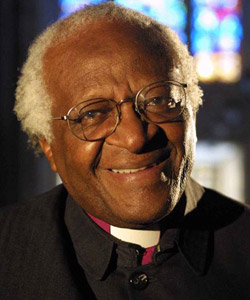
Desmond Tutu sums up this post quite well: tutu

“Anywhere where the humanity of people is undermined, anywhere where people are left in the dust, there we will find our cause. Sometimes you wish you could keep quiet. It’s the kind of thing you heard the prophet Jeremiah complain of where he says, “You know God, I didn’t want to be a prophet and you made me speak words of condemnation against a people I love deeply. Your word is like a fire burning in my breast.”

“It isn’t that it’s questionable when you speak up for the right of people with different sexual orientation. People took some part of us and used it to discriminate against us. In our case, it was our ethnicity; it’s precisely the same thing for sexual orientation. People are killed because they’re gay. I don’t think, “What do I want to do today? I want to speak up on gay rights.” No. It’s God catching me by my neck.”

The New Orthodoxy Test – Part One: Why???

220px-ICA_flag.svgIt’s Pride Week in Manitoba.  So let’s talk about sexuality and Christianity.  You know, because nobody else is doing that, right?

Over the past several years, I’ve noticed something about sexuality and faith that I find interesting.

It appears that one’s posture towards sexual minorities has turned into a modern day orthodoxy test in the church.   It’s our new litmus test, our new standard, our new way of deciding if somebody is “in” or “out”, a “true” believer or a “false” believer.  We seem to filter everything through whether or not one is LGBTQ-inclusive or not, and if somebody finds themselves in a different place than ourselves, we roll our eyes and write them off.

And, just so nobody thinks they can claim the moral high ground, it’s both “sides” doing this to each other.

Now, I’m fairly certain this is fairly common in most conflicts.  We circle the wagons, vilify the other side, and smugly know that we’re right and they’re wrong (and, most likely, believe that they’re really big poo-poo heads too).

But even if this is common in most conflicts, there’s something about LGBTQ inclusion and the church that gets everybody especially riled up.  And I wonder… why?

In my little corner of the Mennonite world, we have churches who are voting to leave our conference because it’s not disciplining other churches who are doing gay weddings. We have churches withholding donations to organizations until that organization writes a clear policy on LGBTQ inclusion or exclusion.  We have churches who are looking to hire pastors, and actually write down in their little 120 word ad that they must hold a traditional view of marriage.  And this is without talking about Caitlyn Jenner, gay wedding cakes, Trinity Western University, Gay-Straight Alliances, self-harm, Michael Sam, the Vatican, Rob Bell, or Supreme Court rulings.

Why the heck are we spending so much time and energy on this?

One’s stance towards sexual minorities is not in any of the historical creeds that have been used to define orthodoxy over the past 2000 years.   If the core values of Anabaptism are Jesus, community, and peace, I don’t see anything about who’s marrying who in there.   We don’t get our knickers in a knot of child vs. infant baptism, who gets communion, different atonement theories, or whether or not Jesus was a pacifist, but if we mention anything about same-sex marriage in the church, watch out, as you just may have kicked a hornet’s nest.

Of all the things that we can possibly disagree on, why has this become the new orthodoxy test?  And why exactly are we fighting about it?

So, this is what I’m going to write about.  I’m going to explore why one’s posture towards sexual minorities has become our new orthodoxy test.

I’ll do my best to NOT write about why one “side” is “right” and the other is “wrong”.   I’m sure some of you will tell me why you’re right, though.  You’ll quote your favourite author that I most likely haven’t read.  Or you’ll tell me 17 reasons why you think what you do.  But, in these posts, I’m not intending to write about where I find myself and why, or who’s right and who’s wrong, but rather try to figure out WHY this question seems to trump all other question (I will probably fail though, as my bias will probably come out.  My apologies in advance).

So as to try make my posts short and readable, I’ve broken my thoughts into four posts, and will be rolling one out each day.  Feel free to agree, disagree, or whatever. Just please keep it civil (so please don’t compare a faithful, committed, monogamous relationship between two consenting adults to bestiality or incest). And the fact that I had to even write that last sentence is probably a good segue into tomorrow`s post.

SOMETHING happened – Podcasts, No WIFI, and Angry Facebook Posts

Based on Acts 2:42-47, that part of Acts where people got together around bread and wine and shared their stuff and were happy about it.


A couple of months ago, I was listening to a podcast, and the host, Pete Holmes, asked the guest, Rob Bell, “Given what we know about how the Bible was compiled, about how the gospels were written decades after the actual events, about how the authors may have been a bit biased, about how history was recorded differently back then, how do we know that this all isn’t a bunch of horse manure?” He might have used a different word.

I really enjoyed Rob Bell’s response.

“Sociologists tell us that large numbers of people don’t simply turn on a dime, and start rallying around something out of nowhere.  So, as a starting point, we know that SOMETHING happened in first century Palestine.  And from there, we read some of the guiding words that this movement put out.  And we find that they chose to declare that Jesus is Lord, and they organize themselves around bread and wine, and making sure everyone was taken care of.  And, since they were firmly in the middle of the Roman Empire, they asked themselves the question:  Is the world a better place because of coercive, military violence of the Romans, or through the sacrificial love and solidarity of the Jesus way?  And then these first followers of Jesus invited others to these meals and said “Come and see what this movement is all about.””  – Paraphrase of Rob Bell on You Made It Weird Podcast with Pete Holmes.

Something happened, and these are the stories that have been told and retold and resonated with over the past 2000 years, and us being here, right now, at Grace Mennonite Church, however long and imperfect that journey has been, is a result of that something.

Today, we can look back at that something and point to the life, death, and resurrection of Jesus.  Especially those of us who identify as Anabaptist, because we believe that Jesus is the lens through which we read Scripture.  We get the life of Jesus, the teachings, the healings, the conversations.  We get the resurrection of Jesus, where Jesus gets the last word, and death doesn’t win.  But we don’t spend a lot of time on the death of Jesus.

A while ago, I used this line in my sermon, and there’s something poignant about it, so I’m going to use it again.

“The cross wasn’t so we could walk in the power of the resurrection.  The resurrection was so we could walk in the power of the cross.” – Gred Boyd

Something happened, and that something has suffering right in the middle of it.  That something that happened 2000 years ago, this something that we call Grace Mennonite Church, in the middle of them all, is suffering.

Suffering, it seems, is not only a part of this journey, but an important part this journey. It’s what changes us.

This week, as I was writing my sermon, I came across this great line by, who else but Richard Rohr.

“Sermons don’t change more people.  Circumstances change people.” – Richard Rohr

I told Ash this earlier this week, and she said, “Oh.  So if what you say doesn’t even matter in the end, don’t worry so much about your sermon.

Circumstances change people.   Two weeks ago, I mentioned that we believe that we’re in control of our lives when things are humming along nicely.  A little bit of family time, a little bit of gardening, a little bit of coaching ultimate, a little of lake time, a little bit of work to pay for everything.

But then, quite quickly, our circumstances can change.  A health crises, a job loss, an unexpected pregnancy, a car crash, a natural disaster, a war… any of these quite quickly reminds us that our control over our lives is more or less an illusion.

I recently have come across a great definition of suffering that I simply love.  

Suffering is every time we are not in control.   – Richard Rohr

Suffering is every time we are not in control.  Health problems?  Suffering.  Little babies who leave us parents sleep deprived?  Suffering.  Natural disasters? Suffering.  Waiting at a red light?  Suffering.  Grumpy co-workers?  Suffering.  Root canals?  Suffering.   No wifi?  Suffering.

None of this suffering is fun.  Some of it, in the end, is quite harmless.  Some of it is frustrating.  Some of it leaves us in a puddle of tears. But it’s the only way that we grow.

Because “Any attempt to engineer or plan our own enlightenment is doomed to failure because it will be ego driven. We will see only what we have already decided to look for, and we cannot see what we are not ready or told to look for. So failure and humiliation force us to look where we never would otherwise.”   –  Richard Rohr in Falling Upwards.

When I was in California with Richard Rohr and Rob Bell a few months ago, we were talking about spiritual growth and enlightenment, and how we grow, and one person asked question: “Do you have any good books to help our spiritual growth?”  Which was a great question, because I love books.  So I got my pen ready for the answer.

I’ll never forget Richard Rohr’s response:  “Books are good.  But you probably won’t grow from them.  The only way we grow is through great love and great suffering, and great love always leads to great suffering.”

That’s a bit of a kick in the pants, eh?  Not very exciting stuff, is it?.  Suffering is how we learn and grow, but for most of us, suffering is the number one thing that we try to avoid in our lives.

**An important aside:  I will never tell someone that God’s has purposed their suffering.  But that’s different than someone finding purpose in their own suffering.  A good understanding of this should stop all those awkward foyer conversations during funerals about God having a plan, or whatever else garbage people say to grieving families.**

I think, if we go back to the SOMETHING that happened in first century Palestine, the Jesus event, the resurrection only happened because of the suffering.  Circumstances happened to Jesus in the form of crucifixion, and it killed him, much as we all face death.  Circumstances happened to the first followers of Jesus, and it was in those moments of pain and loss that they found grew and found life in the Jesus way.

Yes, the story ends in resurrection, but the cross wasn’t so we could walk in the power of the resurrection.  The resurrection was so we could walk in the power of the cross.

We only grow through suffering and failure.  Otherwise, what’s the impetus for grow?  If life is humming along just fine, why change?  Sermons don’t change people.  Circumstances change people.

So, in order to grow, are we supposed to simply wait for suffering, to wait for something that we don’t have control over, to happen to us?

Well, whether we’re waiting for those moments or not, they’re going to happen.  .  But I think there’s also something else we can do.

Mel taught me this, but he learned it from a wise author whose initials are RR.

“We can’t think ourselves into a new way of living.  We have to live our way into a new way of thinking.” – Richard Rohr

We can’t think ourselves into a new way of living.  We have to live our way into a new way of thinking.

He also writes this: “To get a real grasp of the truth of the gospel, I believe we have to enter into solidarity with at least one person who’s different than us.  This means crossing to the other side.  For example, if you’re afraid of a certain race or religion, then the best thing is to head directly there.  If a certain set of people scare you, then you have to enter into solidarity with them.  We have to endure being with those people for a while and learn to view reality from their standpoint. That’s why Jesus says we have to love our enemies.  It’s the only way to grasp the whole picture.  It’s the only way to learn to love the other side of our soul.

But I repeat:   Don’t try to solve it in your head;  Simply act.   First you agree to give yourself, then you will understand it, not the other way around.  Otherwise you get caught in all kinds of protective reasons why you do not need to give yourself and you never make the dive.” – Richard Rohr in Simplicity

And here’s the catch.  Once you move towards someone, especially if they’re different than you, your entire life changes.  You become less judgmental, you understand life is more nuanced than simple black and white, and you will be more loving.  And when you love someone, you open yourself up to hurt and suffering, and that’s precisely when you grow.

Let’s make this as practical as possible for us here this morning.  Let’s go back to the SOMETHING that happened in first century Palestine.  These followers of Jesus were getting together, sharing bread and wine and their lives, and inviting others to join them.

They were audacious enough to invite both rich people and poor people.

They were audacious enough to invite both Jews and Gentiles.

They were audacious enough to invite both men and women.

They were audacious enough to invite both slave and free.

They were audacious enough to invite both oppressor and oppressed.

How long do you think it took for those categories to mean less and less?  That the walls started to break down?  How long do you think that people who might once have been enemies started to see themselves as brothers and sisters?  How long do you think it took for people to start seeing each other not as better than others, but as equals?  How long do you think it took for one person to see the suffering of another and seek to relieve it?

You don’t think into a new way of living.  You live into a new way of thinking.

It probably wasn’t easy for the slave owners.  Or the slaves.  Or the sexists.  Or the racists.  Or the rich people.  Or the poor people. Or the liberals.  Or the conservatives.  Or the one who thought they were better than everybody else.  Or the ones who were convinced of their own rightness. But once you start to care for someone who is not like you, your world can never be the same.

Let’s make this even more practical for us here this morning.

This is why I think that belonging to a church is one of the most counter-cultural practices in our world today.    Because we end up having to figure out how to live and love together long term.

We’re audacious enough to invite rich people and poor people.

We’re audacious enough to not only invite people of all races, but also the racists, and try to love them too.

We’re audacious enough to not only invite people who are straight and gay, but also those who are seeking marriage equality, and yes, those who aren’t as well.

We’re audacious enough to invite pacifists and non-pacifists to come together and try to figure out how to follow the Prince of Peace together.

We’re audacious enough to believe that if we gather ourselves around Jesus, we will inevitably have to start figuring out how to love other.  And because we will disagree about things, our lives together will inevitably be complex and messy.  But that’s okay. Because even if our life together is messy and complex, as long as we are orienting our lives around trying to love each other and the world, to love the “least of these”, to love those who are unlike us, then we are doing something that is rarely replicated in the rest of our world.

This is not the easy path.  This is the hard path. Why?  Have you ever had a conversation with someone who thinks differently than you about wealth?  Or same-sex marriage?  Or the role of church and state?  Or climate change?  Or politics?  Or how to interpret scripture?  Man, these relationships are full of potential anger, animosity, pride, suffering, and angry posts on Facebook.  Lots of potential for suffering here.

But the resurrection was so that we could walk in the power of the cross.

But we just never wake up and say, “I thought about it, and now I’m more loving!  If this was the case, racism would have ended generations ago.  We can’t think into a new way of living. We live into a new way of thinking.  And at the very least, we can do that by showing up somewhere once a week where we at least try to love each other.

SOMETHING happened 2000 years ago that was a turning point in history, where people started gathering around bread and wine and looking after each other, and even loved each other, even if they were different.

My hope and my prayer is that this resonates with us as much as it did for the first believers all those years ago.  Because it is a story that has the power to change the world.

You’ll never guess what Richard Rohr said about Mennonites!

How’s that for a click bait title?


In March, I went to California to spend a few days with Rob Bell and Richard Rohr.  Both are gifted authors and communicators, and it was truly a gift to see them riff together for sixteen hours without notes, and not only blow my mind, but blow each other’s.

I took 34 pages of notes (which is more than I took in most of my university courses), and I could talk for hours about what they said, but what I did want to record here was the conversations I had with them.

** I know my trip was almost 3 months ago.  I’ve been a bit busy coaching the Green Valley Garden Gnomes in the High School Ultimate Provincials.  So thanks for understanding. **

So, I was a bit of a groupie in awe of these two, and I was determined to take a picture of me with them. But I wanted to at least pretend to have a bit of substance to me, so I figured I’d ask them a question first, and then pose for the picture (I’m sure they’ve never seen that move before).

Let’s start with Rob Bell.  We were in line, getting Wachos (waffle nachos), and this is a paraphrased version of our conversation.

image2

“Hi Rob.  Kyle from cold Winnipeg here.  We met while surfing yesterday.”

“Ah, yes.  Cold Winnipeg.”

“I have a question for you. What do you do with all of your critics?”

“What do you mean?”

“Ummm… what do YOU mean, what do you mean?  You are aware that there are some people who don’t like your writing, who disagree with you, who write blog posts about you being a heretic… that kind of stuff.  What do you with all of it?”

“Well, do you know who they are?”

“No.”

“Do I know who they are?”

“No.”

“So, who are these people, and why do what they say matter?”

“Come on, Rob.  You know what I mean.  If you type your name into Google, you find all sorts of websites that state why you suck.”

He smiled at me.

“Okay, first of all, I don’t do this for them.  Their toxicity towards others is a symptom of how toxic their understanding of faith is.  They’re off, over there, doing their thing, and writing for their people.  But I don’t do what I do for them.  I do it for people who have rejected that toxic faith, but still want a vibrant spirituality.  I do it for people who find Jesus compelling, but don’t want all that other stuff.  I’m trying to help people not throw out the baby with the bathwater.  So, yeah, sure, there are people out there who write things about me.  I’ve heard about them. But really, I couldn’t care less.  Because there are hundreds of people who are here, today, who do care, and are finding life within this understanding of spirituality.  I do it all for people like you, and basically ignore the rest, because they’re happy in their understanding of faith.”

“Ahh….”

“And secondly, never Google your name.”

“Thanks Rob.”

And then I went and ate my Wachos on the beach while watching a dolphin swim by.

My take home thoughts from that conversation:  I don’t do it for them.  Their toxicity is a symptom of their toxic faith.  I do it for the people who want to find life in this movement called Christianity, but don’t want anything to do with THAT.


And then, during an afternoon break, I went and asked Richard Rohr a question.

image1

“Hi Father.  Question for you.  You write a lot about ego, and about powerlessness, and about humility.  How does that work when we’re all here paying hundreds of dollars to hear you speak and then bug you during coffee breaks to take your picture?  And by the way, can you smile for a picture?”

“Well, now you’re feeding my ego and causing me to not be humble!  But yes, a good question. It takes a lot of work, but it’s a good thing I’m a Franciscan and I took a vow of poverty and humility.  That helps.  And a lot of prayer and contemplation.”

“Thanks for that.  I’m a pastor in a small Mennonite church, and the other pastor I work with loves your books, and he was quite jealous that I was coming to hear you speak, so this picture will definitely make him jealous.”

“You’re a Mennonite!?!?  I love Mennonites!  If I wasn’t a Franciscan, I’d definitely be a Mennonite. Your understanding of peace and non-violence, community and simplicity have a very large sphere of influence, far further than most of you know.”

“Ha!  Now you’re feeding my ego and causing me to not be humble.  Thanks Father Richard.”

And then I went and elbowed my new Episcopalian priest friend and said “Ha!  Richard Rohr said that if he wasn’t a Franciscan, he’d be a Mennonite. You can have Rachel Held Evans.” (or something along those lines, right Dorian?)

My take home thoughts from that conversation:  I need to pray more.  And dang it, did he ever feed my ego and make me proud to be a Mennonite, hence my need to pray more.


Obviously, there was tons more in those few days, but those are the paraphrases of the conversations I had with Rob Bell and Richard Rohr.  And if you haven’t read any of their books, be sure to stop by my office and I’ll hook you up.

Gandhi, the Boston Marathon, and Game of Thrones

Based on Romans 6:1-14.

____________

About eight years ago, a friend gave me Gandhi’s autobiography and said that I should read it.

Have you ever seen how thick that book is?   And technical?  But, read it I did.  I slogged through it, sometimes amazed at Gandhi’s life, and other times in shock at the extremities he put both him and his family through.

When I finally finished, I went for coffee with my friend to discuss it, and his words to me were, “You actually finished it?  Wow!  I couldn’t get past the first few chapters.”

Thanks.

But, there was at least one story that has stuck with me all these years that I’m going to paraphrase.

Gandhi was a Hindu, and was having a conversation with a Christian.  They were discussing sin and redemption and grace.

The Christian guy said, “Listen.  You’re going to sin.  It’s impossible to live without sin.  That’s why we believe in grace.”

Then Gandhi said, “Yeah, but no.  I’m not looking for redemption from the consequences of sin.  I’m looking to be redeemed from sin itself, or rather, the very thought of sin.”

And then the Christian scoffed.  “Good luck with that.  You won’t succeed.”

And then Gandhi wrote in his book, “And the brother proved as his word.  He knowingly committed transgressions, and showed me that he was undisturbed by the thought of them.”

Sin away, because there’s grace.

This is where our text starts this morning.  Should we keep sinning so that grace can increase?  Or course not.  That’s ridiculous.

The apostle Paul says that our old self was crucified with Jesus.  He tells his readers to consider themselves dead to sin, and alive to God in Christ Jesus! Sin is no longer our master!

Which leads me to ask the question… So how’s that whole not-sinning thing working out for ya?   Yeah, that’s what I thought.

To be very honest with you, this text puzzles me.  I’m not sure what to do with it.  It’s confusing.

On one hand, the guy that Gandhi talked to is obviously missing the point.  Not feeling bad about sinning because you seek forgiveness after is quite silly.

But on the other hand, if all we’re doing is trying harder not to sin, that’s pretty depressing.  Not only will we fail miserably, but usually what happens is we start pointing fingers at others whose sins we declare worse than our own, and then we either kick them out, or go start a new church.

And just in case any of us think that we’ve got this whole “not sinning” thing figured out, we read in the book of James “Anyone who knows the good they ought to do, but doesn’t do it, is guilty of sin.”  James 4:17.  No wonder some people didn’t want the book of James to be in the Bible.

Or, to put this conundrum another way, have you ever caught yourself thinking things like this?

“I know which church that person goes to!  They should know better!”

“Oh.  Your child will be fine.  All the teachers in that school go to church.”

“Nobody ever said that Christians wouldn’t sin.  Christians are just forgiven.”

“Think of all the clergy abuse stories that we now know of.  How can people who are forgiven sin so badly?”

“Nothing you can do can make God love your more, and nothing you can do can make God love you less.”

“God hates sin, and can’t stand it.  You need to confess that to get right with God.”

It’s not quite so cut and dry, as we would sometimes like it, is it?  If going to church, or being a Christian, or trying harder not to sin, or trying harder to be holy, might not work out all that well, what’s the point of it all?  Why even bother?  I mean, if Christians can lead the crusades, torture people, abuse children, order drone strikes, and lie and steal like the rest of the world, all while believing that God is love, and that Jesus is the Prince of Peace, what’s the point of it all?

Maybe, we could ask it like this:  Is transformation possible?   Or:  If it’s not only a matter of “trying harder”, what does transformation look like?

All this, on a long weekend too!

Let’s pick up this question of transformation with a story, as told in Jamie Arpin-
Ricci’s new book, Vulnerable Faith:  Missional Living in the Radical Way of St. Patrick.

 “Wipe that smile off your face, prisoner!”  said the deputy commander of the concentration camp.  This was the man who had condemned the men to die of starvation in order to deter other prisoners from attempting escape.  His cold pragmatism chilled the priest to the bone. 

“It has been two weeks and you seem to be the last man alive  Characteristically stubborn and defiant, as usual,” the commander sneered at the kneeling priest, who bowed his head and said nothing.  “Do you think you have accomplished anything here?  Do you think taking the place of one condemned man – who will die anyways – will give meaning to your life?”  The priest said nothing..

 “Very well”, he added, “this bunker is needed for more important matters.  Prisoner number 16770, I herby sentence you to immediate execution.  Bring the needle!”  A camp doctor entered nervously, a readied syringe in his hand.  Approaching the prisoner, he glanced back and forth between the priest and the captain, not sure how to proceed.  Without  word, the priest raised his arm, offering it to the doctor, nodding to him with a look of such compassion that it was as though he was forgiving the man for what he was about to do.

This is how Father Maximilian Maria Kolbe was martyred, giving his life to spare that a Polish Army sergeant who lived until the age of 94, seeing his family grow and expand over generations.  (Pages 14-15 – Read my review of the book here).

Well, it would appear that within the Christian tradition, there aren’t only stories of sin, but also remarkable stories of transformation.  And every time I get cynical about Christianity, and think it all might be horse manure, I remember stories like these and think “There’s something going on here.”

Let’s start with the idea of grace.  Not big G Grace Mennonite Church,  but little G grace, as in an undeserved gift.  I think to some extent, we understand this.  We understand that God doesn’t treat us as we deserve, that life isn’t about legalistic rules, and that following Jesus is a gift that’s available to all of us.

Dallas Willard takes this idea of grace, and builds on it in a way that I have found helpful.  He understands grace as an undeserved gift from God, but adds that it is also when God helps us do something that we could not do on our own.  Grace is also when God helps us to do something that we could not do on our own.

Because of grace, the Amish in Nikkel mines were able to not only go and sit with the family of the man who killed their children, but also set up scholarships for his kids.

I am continually amazed by the story of Cliff and Wilma Derksen, who, for over 30 years, have relied on God’s grace to help them work through the loss of their daughter Candace, and work through what forgiveness looks like.

In the news these days, one of the two brothers who set off the bomb during the Boston Marathon was found guilty, and they were deciding if he will face the death penalty, or life in prison.  I remember reading in the headlines very different responses.  One of them was by a runner who was uninjured, who declared that he should die, and that she was a veterinarian, so she could fly down there and do it herself.

Another response was by the parents of Martin Richard, an 8 year old who died that day.  I read their story this week, and I sobbed and sobbed.  The father had to leave his dying son to go save his daughter’s life.   2 years later, as they were trying to figure out how to best remember their son, they kept coming back to a picture they had of him at a peace march, holding a sign that said, “No more hurting people – Peace.”  And so they were advocating that the young man who killed their son be spared the death penalty.

Unfortunately, their pleas didn’t work, and on Friday the young man was sentenced to death.

We often think of the saints as these amazing people who are not like the rest of us.  But really, the Derksens are normal Mennonites from Winnipeg, the Amish are normal farmers from rural Pennsylvania, and the Richard family are normal parents in Boston.

Where do these people get this grace from?  How do they experience this transformation?  It’s as if they’re dead to sin, alive in Christ.  It’s as if sin is no longer their master, but grace is.

To quote Dallas Willard again:  “Saints burn up more grace than sinners ever could.”

Can we experience this kind of transformation?  Well, based on the above stories, I would venture to say, yes, transformation is possible.  For everyone, including you and I.

And, I usually hate nice, little, two step sermons, but I keep coming back to two ideas that I think are the foundation for transformation, and without them, I think our ability to truly be transformed is limited.

  • I think that we can adapt the first two steps from Alcoholics Anonymous.  The first step from AA is:  We admit that we are powerless over alcohol, that our lives are unmanageable.  The second step is to believe in a Power greater than ourselves who can restore our sanity.

For us those of who aren’t in AA, I think we can adapt it to:  We are not in control of our lives, or the world.  But we believe in a God who is with us.

This runs completely opposite to almost everything that we’ve been taught in the Western World.  We are responsible for our own lives.  If we work hard, we’ll experience success.  If we don’t like our government, we can vote them out, even if it’s been 44 years.  We believe that we are in control of our destiny.

And while some of this is true, and important, it’s not the whole story.  Because sometimes, we have a health crises.  Or someone we love dies.  Or there’s a car crash.  Or cancer.  Or a bomb at a marathon.  Or we lose our jobs. Or an unexpected pregnancy.  Or our kids make decisions that keep us up all night.  Or an economic crises that wipes out our retirement funds.  Or an earthquake.  Or a tornado.  Or a war starts.  And then, then, we realize that, our control over life is more or less an illusion.

We are not in control, we’re part of something bigger, we need God’s grace to help us do something beyond ourselves, and that’s the first step to understanding transformation.

  • Our spiritual disciplines matter.   Our prayer practices matter.  These things shape us more than we know.  The Amish prayed the Lord’s Prayer often, (…and forgive us our trespasses, as we forgive those who trespass against us), so forgiving the man who sinned against them wasn’t a totally foreign concept.

As I was reading about the father of the 8 year old who died in the Boston Marathon bombing, he spent hours in a rocking chair, alone, reciting the peace prayer of St. Francis of Assisi.  “Where there is hatred, let me sow love.  Where is injury, pardon.  Where there is darkness, light.  Where this is sadness, joy.”  I don’t think he just woke up and decided that the man who killed his son should live.  There’s more going on there.

Or, as I posted on my Facebook wall in August, “I’m reading Game of Thrones, and after the third book I have come to this conclusion: If every character started off their mornings with 15 minutes of silent, contemplative prayer, plus a little bit of asking God to bless their enemies, then there’d be a whole lot less killing and chaos in Westeros.
This is probably quite applicable to non-fiction narratives as well.”

If ISIS prayed for their enemies, I really believe they’d have a hard time killing them.  And if the we prayed for ISIS, and asked God to bless them, then we’d have a hard time supporting the effort to degrade and destroy them.

Or, as St. Francis says, “I consider my enemies my friends, because it shows me that I don’t yet know how to love.”

Our spiritual disciplines, our prayer practices, they matter.  This is also why I think coming to church matters.  No matter how crazy my week is, no matter how bonkers my kids are, or how stressed I am, or how little sleep I got, at least for one hour a week I will pray a little, read scripture a little, sing a little, and learn a little, with the hope that these practices will shape me.

I want to give honesty to the fact that there are both sinners and saints inside the church, and outside the church, both within Christianity and outside of Christianity.  That we’re all capable of great evil, and that we’re all capable of great acts of grace and reconciliation.

But, I believe that if we continually root ourselves in something bigger than ourselves, something inviting us beyond our own little worlds, and engage in practices that nurture that, then I think we’re on the right track to transformation, on the right track to grace being our master.

Amen.

Book Review – Vulnerable Faith: Missional Living in the Radical Way of St. Patrick

stpatrickWhat an inspiring book.

Practical.  Easy to read.  Insightful.  Story-filled.  Honest.  Vulnerable.

Using stories from the life of St. Patrick, Alcoholics Anonymous, his own life, and ultimately Jesus, Jamie Arpin-Ricci is able to get the heart of the spiritual journey and makes the story of radical faith accessible to all.

Writing about spirituality is never easy, as it is always a nuanced conversation that relies heavily on metaphor. But Jamie cuts right to the heart of a discipleship that will lead us to experience freedom, honesty, radical hospitality, genuine community, and transformation.

I’ve only had the book for one week, and I’ve found myself not only referencing it in multiple conversations, but also recommending it everywhere I go.  Why?  I think that when we’re able to be vulnerable, and let go of our pretense and fears, then we’re on the path of opening ourselves up  to loving God and loving our neighbours as ourselves.

Even now, I find myself tongue tied when speaking about the book, because all I want to say is “Do yourself a favour and read this book!”

** Jamie provided me with a copy of his book for review.  I’m glad he did.  You can buy it here. **

Crafts and Cowheads

A short reflection from our Easter Morning gathering


On Maundy Thursday, we had a service of shadows where we remembered the last moments of Jesus before his crucifixion.  The conversations.  The betrayal.  The love.  And the last supper.

Communion.  Bread and wine.

The Latin word for Communion is “Eucharist.”  The “EU” part of the Eucharist means “good.”  And the “Charist” parts means “grace”, or “gift”.  Thus, the Eucharist, communion, the bread and the wine, means, “the good gift”.

Have you ever put a lot of time, energy, thought, money or sweat, into a gift?  You fought the crowds on Boxing Day.  You scoured the internet for just the right gift?  You worked really hard on something and couldn’t wait to give it to them?  Every time I leave home because of work, I come back and my kids have made me a craft or a card that they worked hard on, and with great joy I put them up in my office. These are good gifts.

Or, have you seen something for sale 8 months before someone’s birthday, and you bought it because you knew thcowheadat they’d love it?   This is a cow head with a bottle in it.   It is one of my most prized possessions. Ashley’s sister spent a year in Bolivia with MCC’s SALT program, and in her first month there she saw this cow head and thought:  “Kyle.”  I think she was just as excited to give it to me as I was to receive.

Sometimes, gifts have so much love and energy put into them, it’s like someone broke themselves open and poured themselves out so that you could find life.

“Someone broke themselves open and poured themselves out so that you could find life.

This is how good gifts work.

For someone to receive, someone has had to give.

For someone to eat, someone has to provide the food.

For someone to be inspired, someone had to inspire them.

For someone to love, someone was loved somewhere. 

This is the good gift.  This is the Eucharist. Someone broke themselves open and poured themselves out so that you could find life.” Rob Bell and Don Golden, in Jesus wants to save Christians.

After the last supper, Jesus was crucified.  Jesus was literally broken open and poured out.  On the cross, all the principalities and powers did their worst to Jesus.  Jesus tried showing the world a new way to live, a way of radical love but and all the violence and betrayal and suffering and hatred in the world ganged up, and killed him.

Jesus’ love, led to his death.

Or, as Richard Rohr says, Great love ALWAYS leads to great suffering.

Those of us with kids know this.  Great loves always leads to great suffering.

Those of us with parents know this.  Great love always leads to great suffering.

Those of us with grandparents and grandkids, siblings and cousins, friends and co workers – Great love always leads to great suffering.

But on Easter morning, we remember that this is not the end of the story.  Because here’s the thing about giving gifts.  Even when we put all sorts of effort into giving a gift, when we spend money and fight the crowds and our children labour over the popsicle stick crafts to give us parents, we know that giving the gift is worth it.  We know that all of the our hard work, our anxiety, our hours spent potty training our toddlers and the hours spent sitting beside hospital beds… Suffering isn’t the last word.  We know there’s redemption at the end of the story.  We know about new life.   We know about hope. We know about resurrection.

And this good gift keeps giving.  Jesus is broken open and poured out so that we can find life.  And once we find ourselves in this story, we “open ourselves up to the mystery of resurrection… allowing our bodies to be broken and our blood to be poured, discovering our Eucharist, our good gift, to share with the world.”  (Rob Bell – Jesus wants to save Christians)

This is why, at the Last Super, Jesus tells his disciples:  “Do this in remembrance of me.”

Because of his great love, Jesus suffers, because great love always leads to great suffering.  Jesus is broken open and poured out, but in the midst of that, we find resurrection.

And so, because of our great love, we give our lives as gifts to the world, and often, in the midst of us giving our lives, we find resurrection.  We find hope.  We find new life.

Death and suffering don’t win.  We believe that love wins.  Every time.  We believe in the Good Gift.  We believe that Jesus saves us.  That Jesus rescues us.  We believe in resurrection.

Thoughts on “Freedom” in War Rhetoric

Canada is at war.  Again.

As our leaders discuss why or why not (and where) we should be dropping bombs, I’d like to offer two different definitions of freedom that may help us sort through the rhetoric.

Definition #1Freedom is another word for having the power to kill our enemies.   “It’s a form of power, especially power over and against national enemies.  To come out say it, freedom is the euphemism for lethal power – the power to kill.  When you have power to kill your enemy and the will to do so, you’re free.  When you have the biggest, most well-trained, best-equipped, most lethal military – then you’re “free.””  (Brian Zahnd in Farewell to Mars, pages 117-118).

Definition #1 is the one most used by politicians justifying violence against their enemies.  Conveniently, it’s also used the definition used by their enemies to justify violence against the politicians (or their country, or citizens, etc).    Basically, it’s saying that both sides of an argument want the freedom to kill people who disagree with them.  And when both sides are killing each other to protect their ability to kill each other, well… Yeah.  That’s a bit of a quagmire, isn’t it?

Do you really think the only way

To bring about peace

Is to sacrifice your children

And kill all your enemies?

Larry Norman (Farewell to Mars, p. 131)

Definition #2Freedom is another word for not needing to hate anyone.  When we don’t need to project our hatred against anyone, we’re free (That was either Richard Rohr or Rob Bell, and I think they were quoting Rene Girard.  But they also got it from Jesus).  This is why Jesus speaks about the truth setting us free.  What truth?  That we are to love our enemies.  That we are to pray for those who curse us.  That we are to do good to those who hate us.

Jesus is famously quoted saying “If the Son makes you free, you will be free indeed.”  The funny part about Jesus telling us that the truth will set us free is that he’s tells it to a bunch of people trying to find a way to kill him (see definition #1).

Even the Apostle Paul is on board with this.  “It is for freedom that Christ set us free.  Stand firm, then, and do not let yourselves be burdened again by a yoke of slavery.” What’s the slavery?  “The desire to arrange the world in such a way that it serves the interest of our own self or our own group.”  (Farewell to Mars, 129).  What’s the freedom?  Liberation so that we’re free to love our enemies.

This definition is not used by many of us, as we tend to paint our enemies as evil and beyond redemption, and thus are able to treat them as such.

Now, I am fully aware that to some people, definition #2 of freedom is quite absurd.  “You mean I’m supposed to be free to love everyone?  Even the ones who violently kill people?”

Ummm… You do know that it’s Easter week, right?  The week where we retell the story of how Jesus was killed by both religion and state power?  Where Jesus was painted an enemy and hung up on a cross?  Where he wasn’t getting in line with the powers in arranging the world how they wanted it arranged, and the result was his death?

And how, even on the cross, the Jesus sought the forgiveness for his killers?  How he loved to the end? And how this Jesus movement was the first movement in the history of the world whose leader was killed and his followers didn’t call for vengeance?

I understand definition #1.  However, I believe in definition #2.

I believe that true freedom doesn’t lie in killing our enemies.

I believe that true freedom is not having anyone to hate at all.

And I believe that it’s along the path of definition #2 that we begin to find our salvation.


For a more in depth look at Jesus and ISIS, check out my sermon from the fall.

Design a site like this with WordPress.com
Get started